Internship @ MOVD
Stratos Pro V3
A custom ESP32 PCB with an integrated OLED display that improved system efficiency ~15% through power-rail and component-selection changes.
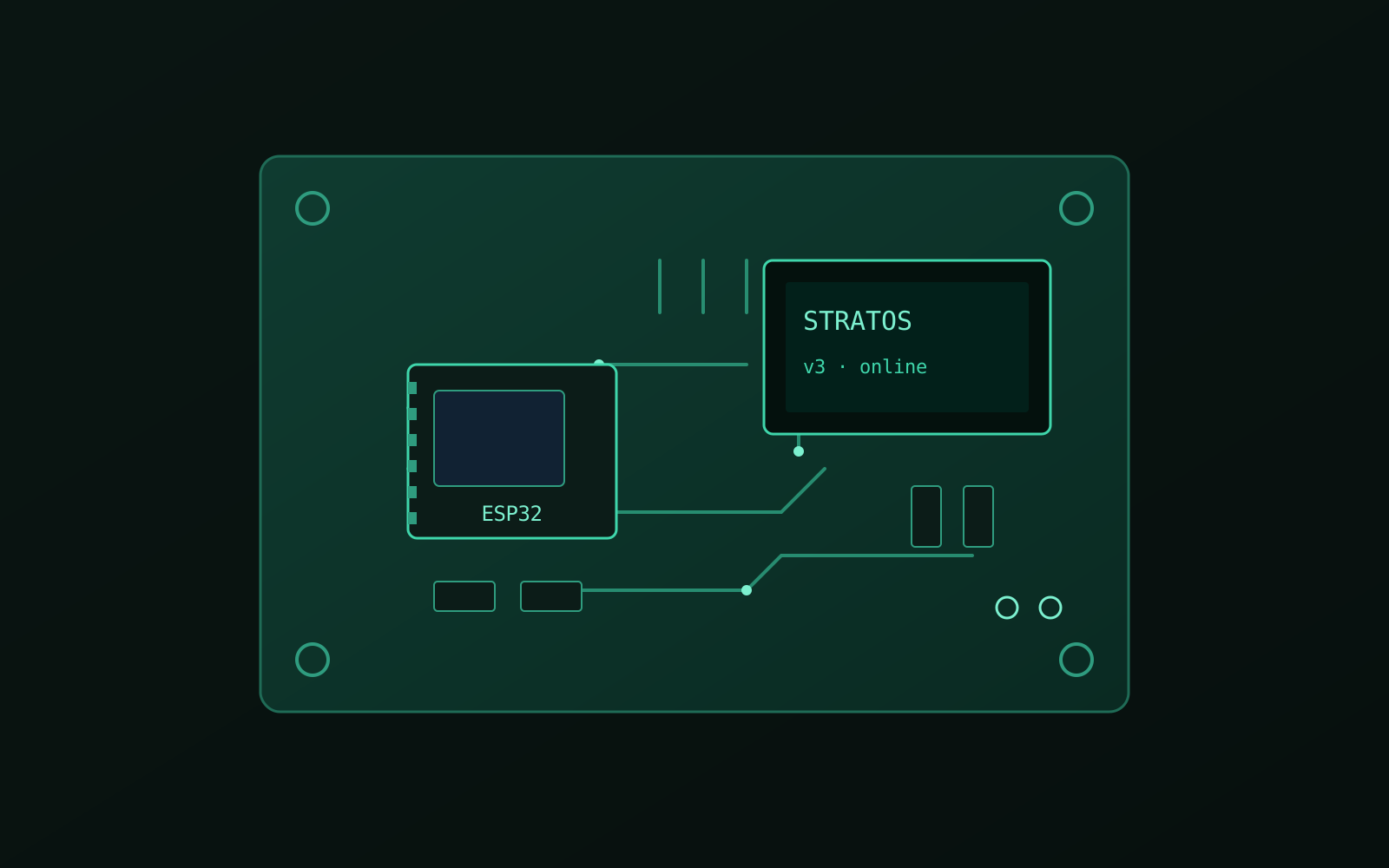
Work from my embedded systems internship at MOVD, described at a general level, with no proprietary details.
Overview
Stratos Pro V3 is a custom ESP32-based board with an integrated OLED display. I worked on it across multiple KiCad revisions, taking spins from schematic and layout through assembly and bring-up. The V3 effort focused on tightening the power design and the manufacturability of the board while keeping the same ESP32-plus-OLED feature set.
What I designed
I laid out the board in KiCad, integrating the ESP32, its power regulation, the IO, and the OLED display onto one PCB. A few priorities drove the layout:
- Power regulation sized for the ESP32’s load, including its bursty RF current draw, so the rails stay stable when the radio is active.
- The display interface (a serial bus such as I2C or SPI) routed cleanly to the OLED.
- Test points on the key rails and signals, so the board could actually be brought up and debugged rather than treated as a black box.
Efficiency and rail consolidation
The headline result was cutting system power by about 15%, and it came from two directions:
- Power-rail changes. Rethinking how the rails were generated and distributed. Consolidating rails removes redundant regulators and their quiescent losses and lets the remaining converters run closer to their efficient operating points.
- Component selection. Choosing regulators and supporting parts with better efficiency and lower standby current for the same function.
Consolidating the rails also cut the part count, which is a manufacturability and cost win on top of the efficiency gain: fewer regulators, fewer passives, and a simpler board to bring up.
Bring-up and validation
I ran bring-up and functional validation on the prototype assemblies:
- Power first. Check each rail’s voltage and ripple on an oscilloscope before anything else powers on, and confirm the power-up sequencing is sane.
- Digital validation. Use a logic analyzer to verify the serial traffic to the OLED and the other buses are behaving, so a dead display gets traced to the actual cause (bus, address, power, or firmware) instead of guesswork.
- Failure isolation. When a board misbehaved, I isolated the fault to a specific stage and root-caused it, resolving hardware defects before the revision was released.
What I took away
Owning multiple revisions of the same board taught me how much of good hardware is designing for the bench: the rails you can probe, the test points you place, and the bring-up plan you think through before the boards ever arrive.