Personal
Formula SAE Electrical System Integration
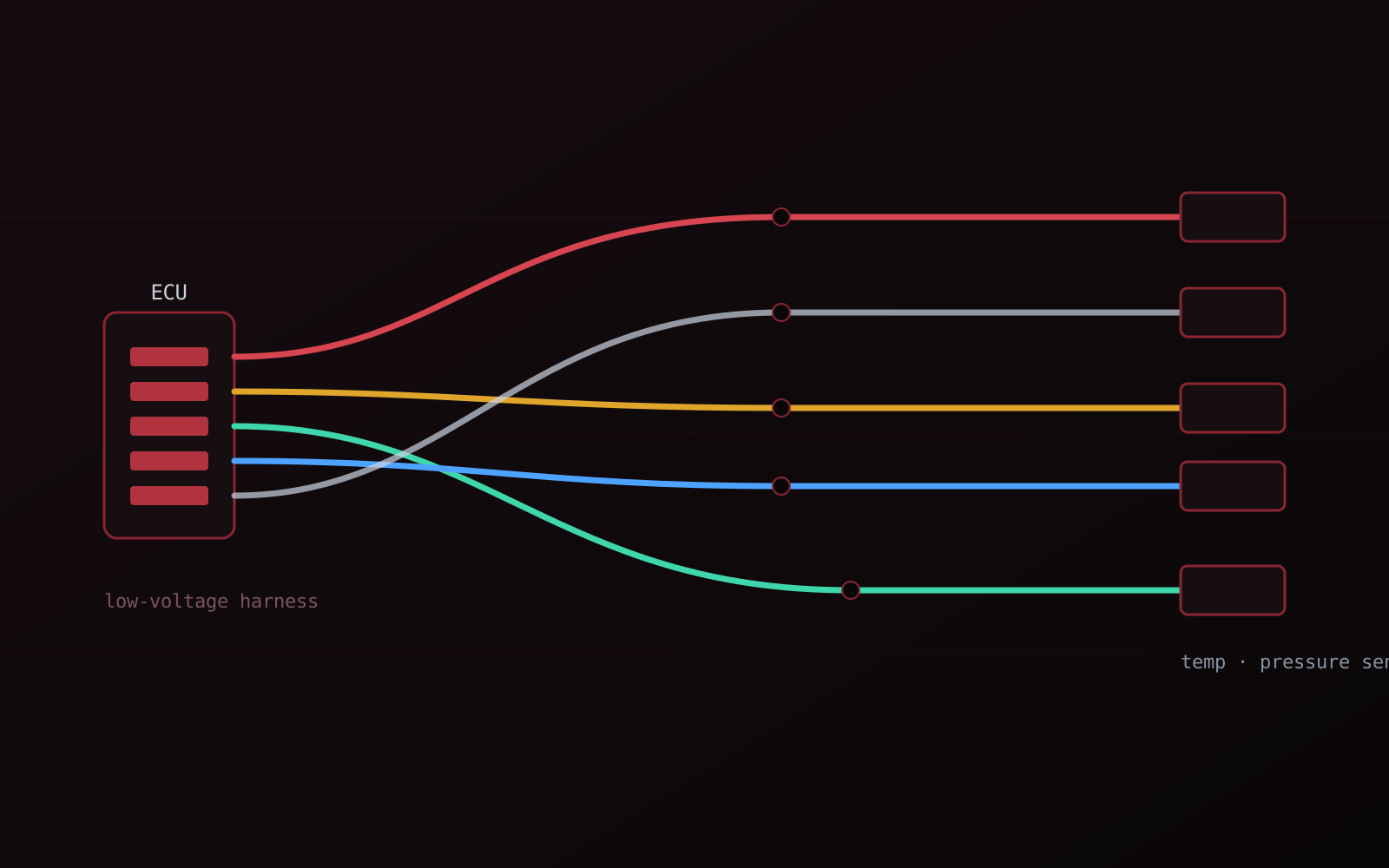
Low-voltage signal routing and power distribution for the vehicle’s temperature and pressure sensing subsystems, with grounding, fuse protection, and connector current ratings analyzed across the car.
Context
I work on the SCU Formula SAE electrical team, integrating the car’s low-voltage sensing and power distribution. The job is getting clean signals and reliable power where they need to go, in an environment that is hostile to both: vibration, heat, and electrical noise from the powertrain, on a car that is built, torn down, and rebuilt over a season.
Signal routing and power distribution
I built the low-voltage signal routing and power distribution for the temperature and pressure sensing subsystems, including the runs to the driver display module so the driver sees live sensor data. Two priorities drive those runs:
- Keep the sensor signals clean. Route low-level sensor lines away from noisy power and switching, and treat the sensor return paths carefully so noise does not ride in on the ground.
- Distribute power deliberately. Feed the sensors and the display from a defined distribution scheme rather than ad-hoc taps, so every load is known and protected.
Grounding strategy
Grounding is where sensor accuracy is won or lost. A sloppy ground scheme creates ground loops, where return currents from higher-current loads shift the reference a sensor is measured against and show up as noise or offset in the reading. I worked out a defined grounding strategy for the sensing subsystems so their references stay quiet and the measurements stay trustworthy.
Protection and conductor sizing
Across the car I analyzed fuse protection, connector current ratings, and conductor sizing:
- Fusing sized to protect the wire, so a fault opens the fuse before it can overheat a conductor.
- Conductor gauge chosen for the current it carries and the voltage drop it can tolerate over the run, with margin for the mechanical abuse of a race car.
- Connectors rated for their current and, just as importantly, chosen to survive vibration and dynamic load, since a connector that backs out mid-session is a DNF.
Building for the car
Designing and validating vehicle-grade harnesses means building for the real environment, not the bench: strain relief so vibration does not fatigue a joint, routing that keeps harnesses off hot and moving parts, and terminations that hold up through repeated build-and-teardown cycles.